rohitraj.tech Redesign
open sourcebackendscale·2026-01-31
Complete redesign from consultancy landing page to engineer-centric project directory with documentation-first aesthetic.
→ Live at rohitraj.tech
src/appsrc/componentssrc/dataDocumenter les décisions d'ingénierie, l'architecture et les apprentissages de la construction de systèmes IA en production.
Jul 30, 2026
Week 31 of 2026 shipped one story twice. GitHub made agent skills and MCP generally available in Copilot code review, Google added hooks to Gemini Managed Agents — and on the same day, a benchmark showed the best model follows a written policy document just 36.2% of the time, while a self-propagating worm walked through Copilot for Word. Plus what Kimi K3 really costs to run locally (594 GB floor) and the 250B sleeper release you can actually serve.
Jul 29, 2026
OpenAI open-sourced Codex Security under Apache-2.0 — a CLI and TypeScript SDK that builds a threat model of your repo, then runs an isolated validator to prove a finding is exploitable before it reports it. Here's how that differs from Snyk, Semgrep and CodeQL, the real commands, and the three cases where I'd still reach for Semgrep instead.
Jul 24, 2026
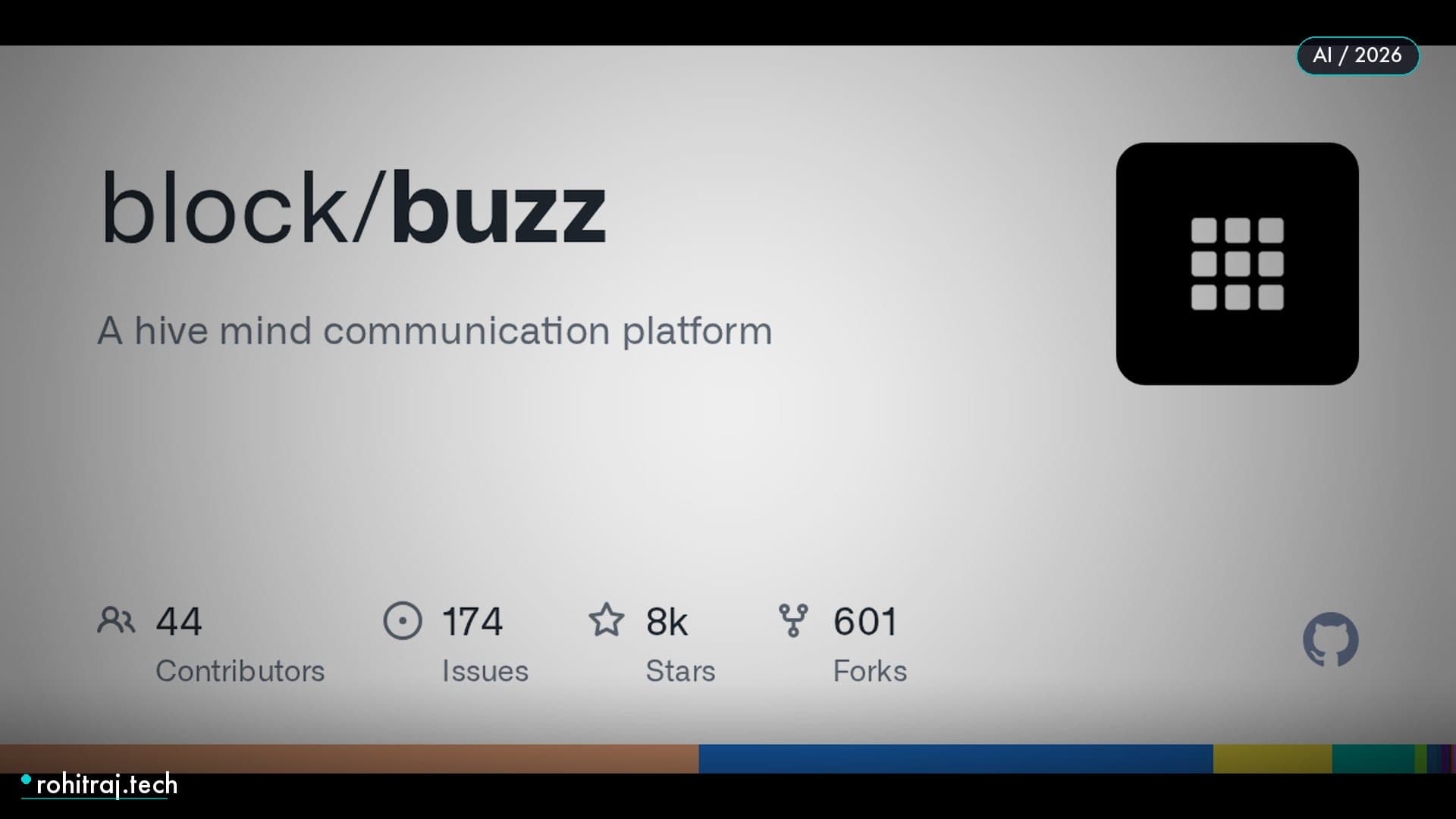
Block released Buzz on July 21, 2026 — an Apache-2.0, self-hostable workspace built on Nostr where AI agents join channels as cryptographically-signed members, not permission-restricted bots. It hit 7,600+ GitHub stars in three days. The launch coverage tells you what it is; this guide shows you how to actually run it: the exact install path, how to onboard a Claude Code or Codex agent with its own keypair, where Buzz genuinely beats Slack-plus-bots, the compliance gaps that should keep it out of production today, and the hardening checklist the same week's OpenAI–Hugging Face incident makes non-negotiable.
Jul 23, 2026
Google's July 21 drop is an efficiency release, not an intelligence release: Gemini 3.6 Flash scores the same Intelligence Index as 3.5 Flash but finishes tasks in half the time at a lower per-task cost — while Flash-Lite quietly got a 67% output-price increase. Here's the real per-task math, the migration code, and the tier decision I'd actually ship.

Jul 21, 2026
Week 30 of 2026 split in two: China's labs shipped trillion-parameter frontier models while the tools that run agents got a hard security look. Moonshot's Kimi K3 (2.8T params, open weights by July 27) landed at #2 behind Claude Fable 5, Alibaba previewed a 2.4T Qwen 3.8, and xAI's grok-build hit 20,982 stars in under two weeks. Meanwhile an unpatched Cursor 0-day went public after seven months, Codex started encrypting sub-agent prompts, and Claude Code quietly moved to Bun-in-Rust.
Jul 20, 2026
OmniRoute is the AI gateway that shot past 20,000 GitHub stars in days: one local, MIT-licensed, OpenAI-compatible endpoint that fans out to 268 providers and 500+ models, with an 18-strategy fallback engine and 15-95% token compression. The best part is real — it runs 100% on your machine with your own keys and never phones home. But the "1.4 billion free tokens" headline, the TLS-fingerprint stealth, and the Cursor-intercepting MITM proxy are exactly the features a careful engineer should treat with suspicion. This is the honest review: what OmniRoute genuinely does well, where it beats OpenRouter, LiteLLM, and Portkey, the failure modes the promo posts skip, and precisely when I would — and would not — put it in a workflow.
Jul 19, 2026
The MCP 2026-07-28 specification goes final on July 28, 2026, and it rewrites the protocol to be stateless: no more initialize handshake (SEP-2575), no Mcp-Session-Id header (SEP-2567), with protocol version and client info moving into a _meta field on every request. That one change lets MCP servers deploy like any stateless service — serverless and Kubernetes autoscaling finally work without sticky sessions — but it breaks every server that assumed a session. Here is the full before/after migration in TypeScript: the stateless transport config, per-request _meta, the new Tasks extension lifecycle, the -32602 error change, the six auth-hardening SEPs, and exactly which servers should wait.

Jul 18, 2026
Every site your AI coding agent builds looks the same: Inter font, a purple gradient, six identical cards, a bounce on every hover. Hallmark — a design skill for Claude Code, Cursor, and Codex that hit 12.4k stars this week — runs 57 "slop-test gates" to refuse those defaults before the code is emitted. Here is what AI slop actually is, exactly how Hallmark works, the four verbs with real commands, how it stacks up against frontend-design, Impeccable, and Stitch, and when a skill still will not save you from a bad design.
Jul 17, 2026
Apple shipped SpeechAnalyzer in iOS 26 and macOS 26 with zero published accuracy numbers. The first rigorous benchmark just landed: 2.12% word error rate on clean English, beating every on-device Whisper model and running ~3x faster than Whisper Small on an M2 Pro. Here is the full Apple vs Whisper vs Parakeet vs Qwen3 breakdown, the Swift to wire it up, the speaker-diarization gap nobody mentions, and exactly when you should still reach for Whisper.
Jul 16, 2026
Thinking Machines released Inkling on July 15, 2026 — 975B params, 41B active, Apache 2.0, 1M context, weights on Hugging Face. Every writeup tells you how to run it. None tells you whether to. The BF16 checkpoint needs 2 TB of VRAM; NVFP4 needs 600 GB. The 8x H200 box they name is an AWS p5en.48xlarge at $63.296/hr — $46,206/month always-on. Against the $4.68/M output API, self-hosting breaks even at 9.87 billion output tokens a month. Here is the VRAM ladder, the real cost math, the July 17 price hike everyone missed, and the quant trap that will eat your agent.

Jul 15, 2026
PrismML shipped 1-bit and ternary builds of Qwen3.6-27B on July 14, 2026 — 5.9 GB for ternary, 3.9 GB for 1-bit, running at 163 tok/s on an RTX 5090 and 11 tok/s on an iPhone 17 Pro. Every writeup leads with "retains 95% of baseline." Nobody breaks out the row that matters: tool-calling drops 80.0 to 66.0 at 1-bit — degrading 4.6x worse than math. For a model sold on laptop-local agents, that is the whole story. Here is the variant decision table, the runnable commands, the KV-cache trap that makes 5.9 GB of weights need 13.7 GB of RAM, and how I would ship this in production.

Jul 14, 2026
Week 29 of 2026 in AI dev tools: OpenAI ships an official plugin that runs Codex from inside Claude Code, a viral teardown shows Claude Code burning 33k tokens before it reads your prompt, Stably's orca gives you a control room for a fleet of parallel agents, Microsoft's Flint lets agents draw charts instead of dumping tables, Z.ai's GLM-5.2 tops Hugging Face trending, and Tencent open-sources CubeSandbox so your agents stop running rm -rf on the host.

Jul 13, 2026
On July 24, 2026 at 15:59 UTC, DeepSeek fully retires the deepseek-chat and deepseek-reasoner model names — every API call still using them starts returning errors. The replacement names (deepseek-v4-flash, deepseek-v4-pro) take ten minutes to wire in, but two silent gotchas can wreck your bill or your latency: thinking mode moved from a model name to a request parameter, and the naive migration path can turn your cheapest endpoint into a reasoning-token furnace. Here is the exact before/after code, the Flash vs Pro decision table, the Anthropic-SDK routing trick, and how I would stage the cutover in production.

Jul 12, 2026
Destructive Command Guard (dcg) trended on GitHub in July 2026 (Rust, MIT, 2.3k stars) as a sub-millisecond PreToolUse hook that blocks your AI coding agent from running rm -rf, git reset --hard, force pushes and DROP TABLE before they execute. It wires into Claude Code, Cursor, Codex and Copilot in one install. But Adversa AI's GuardFall research bypassed the command guards in 10 of 11 popular agents. This is the builder's read: how dcg works, how to install it, whether these guards actually hold, how dcg stacks up against agent-guardrails, Shellfirm and SigmaShake, and exactly how I'd wire real agent safety into a production workflow — guard plus sandbox, not guard alone.
Jul 10, 2026
On July 7, 2026, researchers tricked GitHub's AI agent into copying a private repo and posting it as a public comment — no code, no credentials, one word. GitLost is not a GitHub bug you wait for a patch on; it's the prompt-injection class every coding agent inherits the moment you give it real permissions. Here's how the attack works, why it can't be fully patched, and the least-privilege playbook I use to keep my own agents from leaking data.

Jul 10, 2026
On July 9, 2026, OpenAI split GPT-5.6 into three tiers — Sol, Terra, and Luna — and the model string you pick now swings your bill by up to 5x. Sol is the flagship, Terra is near-flagship at roughly half the cost of GPT-5.5, and Luna is the cheap, fast one. Most teams reach for Sol and overpay. Here's the tier-selection framework I use, the benchmarks that justify each choice, and the exact migration code to switch.

Jul 9, 2026
ai-job-search crossed 15,000 GitHub stars — 5,000+ in one day — as one of 2026's fastest-growing Claude Code workflows. It's not an app; it's a fork-and-fill framework that turns the Claude Code CLI into a job-hunting agent. Here's the architecture, the drafter-reviewer loop that makes it work, and the honest failure modes of auto-apply from someone who runs an outreach agent daily.
Jul 8, 2026
OfficeCLI is the open-source tool developers are using to let an AI agent actually build Word, Excel and PowerPoint files — not describe them, build them, with formulas that compute. It crossed 10,576 GitHub stars and shipped v1.0.131 on 2026-07-08. Here is the builder read: what it is, the render-look-fix loop that gives your agent eyes, the one-line MCP install for Claude Code and Cursor, a worked example where an agent assembles a real Excel financial model, an honest 4-way comparison against Microsoft 365 Copilot Agents, python-docx and Aspose, and the prompt-injection failure mode you must gate before you ship it.
Jul 7, 2026
Week 28 of 2026 in AI dev tools: Claude Sonnet 5 does Opus-tier agentic work at $2/M input, Alibaba's page-agent controls any web app from one line of JavaScript, OmniRoute routes 231+ providers and cuts 15-95% of tokens, Ternlight ships a 7MB semantic-search model that runs in the browser, Google's TabFM predicts tabular data zero-shot, and Nvidia squeezes Qwen3.6-27B onto a single consumer GPU with NVFP4.
Jul 6, 2026
NVIDIA quietly shipped LocateAnything-3B on May 26, 2026 — a 3B open-weights vision-language model that turns a plain-English phrase like "the submit button" into exact pixel boxes, no fixed class list, no retraining. It grounds objects, GUI elements, and text with up to 2.5x higher throughput than older box-by-box decoders. By early July it had crossed 1.2M Hugging Face downloads. Here is what actually changed, runnable code to try it, how it stacks up against YOLO / Grounding DINO / Florence-2 / Qwen2.5-VL, and the license catch that will stop you shipping it to production if you are not careful.

Jul 4, 2026
Apple shipped an official Safari MCP server in Safari Technology Preview 247 on July 1, 2026 — 16 built-in tools that let AI coding agents see your rendered page, read the console, and evaluate JS directly instead of you describing screenshots. There's also a separate, older community safari-mcp npm ecosystem with 80+ tools that works on production Safari. Here's what's actually new, how to install either one, when Apple's version is the right pick, and how I'd wire it into a real dev workflow without waiting for a CI runner that supports Safari headless.

Jul 3, 2026
Strix (usestrix/strix) hit #1 on GitHub Trending on July 3, 2026 with +2,137 stars in a day — 32.8k total, Apache 2.0. It runs autonomous AI agents that act like real hackers: they exploit your app, validate each finding with a working proof-of-concept, and file only bugs they actually broke. On the XBEN benchmark it solved 100/104 web challenges (96%) at ~$3.37 each. This is the builder's read — what it is, how to install and run it, whether it hallucinates, how it stacks up against XBOW and PentAGI, when to skip it, and exactly how I'd wire it into a real MVP's CI pipeline without it torching your API budget.
Jul 2, 2026
Baidu open-sourced Unlimited-OCR on June 22, 2026 (MIT) — a 3B mixture-of-experts model with 500M active params that parses 40+ page documents in a single forward pass. Its new Reference Sliding Window Attention (R-SWA) keeps the KV cache flat, so memory and latency stay constant as output grows. It scores 93.23 on OmniDocBench v1.5 — beating DeepSeek-OCR by 6.22 points — at 12.7% higher throughput. This is the builder's read: what R-SWA actually does, how to run it locally with Transformers and vLLM, where it beats a cloud OCR API, when to skip it, and exactly how I'd wire it into a production RAG ingestion pipeline.
Jul 1, 2026
DeepReinforce shipped Ornith-1.0 on June 25, 2026 — an MIT-licensed family of coding models that learn to write their own agentic scaffold during RL instead of using a human-designed harness. The 397B flagship hits 82.4 on SWE-bench Verified (DeepReinforce reports it edges past Claude Opus 4.7); the 9B runs on a single 24GB card. This is the builder's read: what self-scaffolding actually is, real vLLM and Ollama run commands, an honest comparison table, when to skip it, and the chat-template gotcha that will send your local copy into a runaway loop.
Jun 30, 2026
Week 27 of 2026 in AI dev tools: DeepReinforce's Ornith-1.0 ships MIT-licensed self-scaffolding coding models from 9B to 397B, Qwen 3.6 27B becomes the local-dev sweet spot at 28GB, vLLM turns one API call into a bounded multi-model collaboration, Herdr multiplexes 15+ coding agents in your terminal, Wayfinder routes deterministically between local and hosted LLMs, and Anthropic ships Claude Tag for async Slack delegation.
Jun 29, 2026
An open-source deep research agent now sits at #1 on DeepResearch Bench — ahead of OpenAI, Gemini, and Perplexity. So you no longer have to rent deep research from a frontier lab. This is the builder's read on the four worth self-hosting in 2026 — Onyx, DeerFlow 2.0, Perplexica/Vane, and Khoj — with live star counts, a runnable Docker self-host, an honest comparison table, when to skip self-hosting entirely, and the production wiring the READMEs leave out.

Jun 28, 2026
AutoGen is in maintenance mode — Microsoft folded it and Semantic Kernel into the new Microsoft Agent Framework, which hit 1.0 GA in 2026. So the old "LangGraph vs CrewAI vs AutoGen" advice is stale. This is the builder's read: the same agent written in all three frameworks, where each one actually wins, an honest comparison table, how to migrate an AutoGen AssistantAgent to a ChatAgent, when to skip the Microsoft stack entirely, and the setup I'd ship to production.
Jun 27, 2026
Google baked computer use into Gemini 3.5 Flash on June 24, 2026 — a vision-based agent that clicks, types, and scrolls across browser, mobile, and desktop. This is the builder's read: what actually shipped, the real interactions.create agent-loop code, honest OSWorld numbers (Gemini 78.4 vs GPT-5.5 78.7 vs Claude Opus 4.8 83.4), a side-by-side against Claude computer use and OpenAI, when to skip it, and exactly how I'd wire one into production without it draining a credit card or running a prompt injection.

Jun 26, 2026
Z.ai shipped GLM-5.2 as open weights (MIT) in June 2026, and it matches Claude Opus 4.8 on real coding-agent tasks at a fraction of the per-token price. This is the builder's read: what actually shipped, the real code to call it and drop it into Claude Code, an honest cost breakdown (the per-token gap is huge but GLM burns ~3.3x more tokens), a side-by-side table, when to stay on Opus, and the hybrid routing setup I'd actually ship — Opus for the 20% of tasks where the gap bites, GLM-5.2 for the other 80%.
Jun 25, 2026
Google made the Gemini Interactions API generally available in 2026 and quietly made it the default interface for Gemini models and agents. The core method is `interactions.create`, and it keeps conversation state server-side via `previous_interaction_id` instead of resending the full history every turn like `generateContent`. This is the builder's migration read: the actual code diff from `generate_content` to `interactions.create`, the interaction-scoped-tools footgun the docs bury, a side-by-side against generateContent and OpenAI's Responses API, an honest "when to stay on generateContent," and exactly how I'd wire it into production with a fallback and a `store=false` privacy path.

Jun 24, 2026
Mistral shipped OCR 4 on June 23, 2026 — model `mistral-ocr-latest` — and it tops OlmOCRBench at 85.20, handles 170 languages, and costs $4 per 1,000 pages ($2 batch) against AWS Textract's $65 per 1,000 for forms-and-tables. Every comparison guide currently ranking still covers OCR 3 or ignores Mistral entirely. This is the builder's read: what actually changed in OCR 4, the API call with the new confidence-score gating, an honest accuracy-and-price table against Textract, Google Document AI, and Azure, where each one genuinely wins, when you should NOT pick Mistral, and exactly how I'd wire it into a RAG ingestion pipeline in production.
Jun 23, 2026
Week 26 of 2026 in AI dev tools: Z.ai's GLM-5.2 open weights match Claude Opus 4.8 and beat GPT-5.5 on coding at a sixth of the cost, MiniMax-M3 ships open multimodal weights with a 1M-token context, CircleCI adds an MCP server as MCP crosses 200 implementations, and indie devs ship agent-native version control (Oak), local memory for Claude Code (Recall), and proof a 0.6B model fine-tunes on a laptop.
Jun 23, 2026
Sakana AI shipped Sakana Fugu on June 22, 2026 — an orchestration model that routes each request across a swappable pool of frontier LLMs behind one OpenAI-compatible API, in two tiers (fugu and fugu-ultra-20260615), with benchmarks showing Fugu Ultra leading 10 of 11 tests. This is the builder read: what actually shipped, the API call you paste today, the benchmark table against Opus 4.8 / Gemini 3.1 Pro / GPT-5.5, where an orchestration model earns its keep, when its black-box routing disqualifies it, and how I would wrap it in production so a fallback-as-a-service still has a fallback.
Jun 21, 2026
Sina Weibo dropped VibeThinker-3B this week — a 3-billion-parameter, MIT-licensed reasoning model that matches DeepSeek V3.2 (671B) on AIME 2026 (94.3 vs 94.2) and runs from a ~6 GB file on a laptop. The catch the headlines skip: it ties on AIME but trails on harder math (HMMT 89.3 vs 90.2, IMO-AnswerBench 76.4 vs 78.3), which is exactly why the AI world is arguing about benchmarks again. This is the builder read — what actually shipped, the Spectrum-to-Signal training trick behind it, the vLLM and Ollama commands to run it (including the temperature setting that breaks it if you get it wrong), an honest comparison table, where a tiny verifiable-reasoning model is worth wiring into an agent, and where it absolutely is not.

Jun 20, 2026
DeepSeek turned on vision for V4 this week — image understanding inside chat.deepseek.com and the API, hitting the Hacker News front page on June 18, 2026. The hook for builders: it encodes an ~800×800 image into roughly 90 KV-cache entries versus ~870 for Claude and ~1,100 for Gemini, which is where the "10x cheaper multimodal" headline comes from. This is the builder read — what actually shipped, the OpenAI-SDK call you paste today, where DeepSeek vision wins (OCR, documents, charts, UI screenshots), where it still loses to GPT and Gemini, an honest cost-and-capability comparison table, and how I would wire it in production with a fallback so a single cheap model never becomes a single point of failure.
Jun 19, 2026
The Model Context Protocol just shipped Enterprise-Managed Authorization — "zero-touch OAuth" — on June 18, 2026, and it changes how you secure a remote MCP server. This is the builder read: what the spec actually mandates (OAuth 2.1, Protected Resource Metadata, token-audience binding), why Dynamic Client Registration is now deprecated in favour of Client ID Metadata Documents, how the new ID-JAG enterprise grant lets an IdP grant every approved server at login, a 3-way comparison of API keys vs OAuth 2.1 vs enterprise auth, and exactly how I would wire this in production without opening a confused-deputy hole.
Jun 18, 2026
Google's WebMCP hit a public Chrome 149 origin trial this month, and it quietly changes how AI agents use your site: instead of scraping the DOM, your page hands the agent a typed list of things it can do. Here is the builder read — what WebMCP actually is, the exact document.modelContext API with copy-paste code, how it differs from MCP, the prompt-injection failure mode the tutorials skip, and whether you should ship it today (honest answer: register the API, gate the writes, wait on the trial).

Jun 17, 2026
Two Hacker News front-page threads this week — one at 1,245 points — are asking the same thing: can a local model finally replace Claude or GPT for daily coding? The honest 2026 answer is "for ~80% of your sessions, yes." Here is the builder read: which local coding models actually crossed the SWE-bench line, how to set one up with Ollama in ten minutes, exactly how much VRAM you need, and the hybrid routing pattern that keeps the hard 20% on the cloud.

Jun 16, 2026
Week 25 of 2026 in AI dev tools: the US government forces Anthropic to suspend Claude Fable 5 and Mythos 5 three days after launch, Moonshot ships Kimi K2.7-Code open weights, Google open-sources the text-diffusion model DiffusionGemma, the Claude Agent SDK flips to metered billing on June 15, OpenCode crosses 160K GitHub stars, and agentic payments via x402 + AP2 quietly become real.

Jun 15, 2026
A 1M-token context window is not memory — it is RAM that gets wiped when the session ends. On the LoCoMo benchmark a two-layer memory setup hit 91.6% accuracy at ~6,956 tokens vs 72.9% at ~26,000 tokens for full context. Here is the builder read: why context windows behave like RAM, the two-layer architecture every production agent needs, a minimal pgvector memory layer in code, and when a bigger window is still the right call.

Jun 14, 2026
Moonshot AI dropped Kimi K2.7-Code on June 12, 2026 — a 1T-parameter open-weight coding model that costs $0.95/$4.00 per million tokens, roughly 5-7x cheaper than Claude Opus 4.8 and GPT-5.5. Here is the developer read: the real benchmark numbers (and why they are all first-party), a verified cost-per-task comparison the hype guides skip, how to run it via API or locally, and when you should still reach for Claude or GPT.

Jun 13, 2026
x402 crossed 161M cumulative payments and got picked up by AWS Bedrock AgentCore in May 2026, while Google’s AP2 defines the trust layer above it. Here is the developer read: how x402 and AP2 actually work, working code to monetize an MCP server or API per request, the per-request settlement trap, and when to skip crypto rails entirely.

Jun 12, 2026
OpenCode just became the most-starred AI coding agent on GitHub — 172,198 stars under MIT, with v1.17.4 shipping June 12, 2026. Here is the developer read: how the free, model-agnostic OpenCode compares to Claude Code and Cursor, the Terminal-Bench numbers, the BYOK cost math, and when each one is the right call.

Jun 11, 2026
Google open-sourced DiffusionGemma on June 10, 2026 — a 26B MoE that writes a 256-token block in parallel instead of one token at a time, hitting 700+ tokens/sec on an RTX 5090 and up to 4x faster than Gemma 4. The catch: quality sits below standard Gemma 4. Here is the developer read — how text diffusion works, how to run it locally, the speed-vs-quality decision, and when to skip it.
Jun 11, 2026
A build-focused guide to self-hosting Google's DiffusionGemma: the exact vLLM serve command, what each diffusion flag does, how to call it like an OpenAI endpoint, and how to tune the speed-vs-quality trade-off on an RTX 5090 or H100.
Jun 10, 2026
Anthropic shipped Claude Fable 5 on June 9, 2026 — a Mythos-class model at $10/$50 per million tokens, double the Opus 4.8 rate. Here is the developer read: the claude-fable-5 API, the Opus-4.8 safeguard fallback you must design around, the new 30-day retention rule, Fable vs Mythos, and when to wait.
Jun 9, 2026
Week 24 of 2026 in AI dev tools: OpenAI's Codex graduates from coding agent to app builder with Sites and role plugins, three open-weight models drop in 72 hours (MiniMax M3, Gemma 4 12B, NVIDIA Nemotron 3 Ultra), Anthropic moves the Agent SDK to metered billing on June 15, Microsoft Build hardens agent security, and the Gemini CLI consumer sunset hits June 18.

Jun 8, 2026
Harness engineering is the discipline of building the scaffolding — docs, golden rules, custom linters, and agent-to-agent review loops — that lets AI coding agents ship reliable software at scale. OpenAI coined the term after building a ~1M-line beta product in 5 months with zero hand-written code using Codex. Here is what a harness actually contains, the architecture that makes it work, when it pays off, when to skip it, and how I run a smaller version of it today.
Jun 7, 2026
Open Notebook just hit #1 on GitHub Trending — but is it the best self-hosted NotebookLM alternative? Here's how Open Notebook (MIT), Khoj (AGPL-3.0), and SurfSense (Apache-2.0) actually compare on Docker setup, RAG architecture, integrations, and the open-source license trap that can bite a commercial build.

Jun 7, 2026
NVIDIA and Microsoft unveiled the RTX Spark superchip at Computex 2026 — a 20-core Grace Arm CPU plus a 6,144-core Blackwell RTX GPU and up to 128GB unified memory that runs 120B-parameter LLMs locally with up to 1M tokens of context. Here is the developer-only read: the confirmed specs, RTX Spark vs DGX Spark, how it ties into Satya Nadella’s agentic-AI push at Build 2026, what you can actually build on it this fall, and when to wait.
Jun 6, 2026
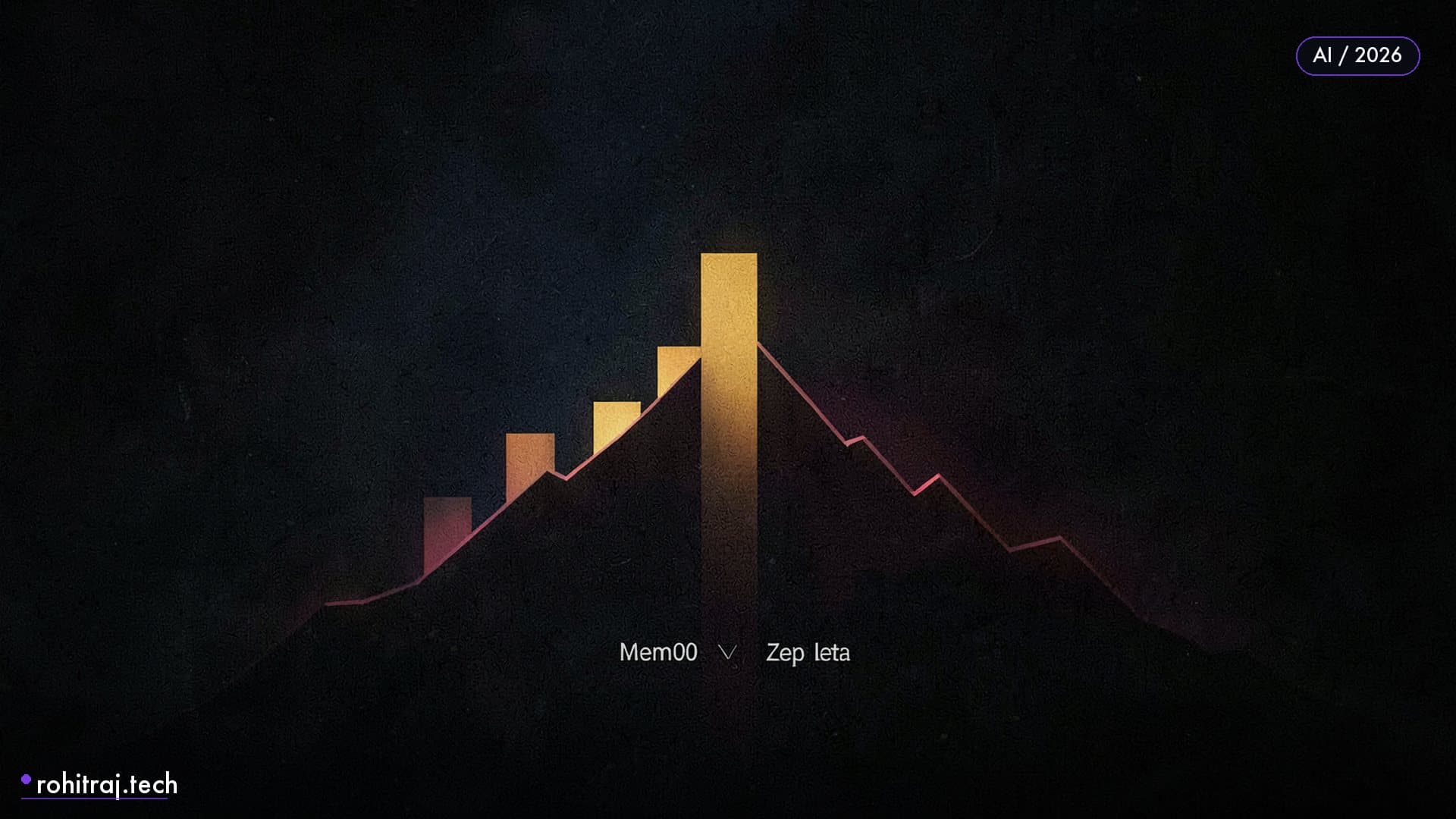
Agent memory — not the model — is the 2026 bottleneck. MemPalace just hit 54.1k GitHub stars and shipped v3.4.0 with a 96.6% LongMemEval score and zero API calls. Here's how the four open-source AI agent memory layers (Mem0, Zep, Letta, MemPalace) actually compare on architecture, real benchmarks, and honest licensing — plus a code snippet to add memory in minutes and how I'd wire it into a production agent.

Jun 5, 2026
Anthropic open-sourced defending-code-reference-harness — a Claude-powered pipeline that finds and patches security bugs in your code — and it hit the GitHub Trending front page this week. Here's what actually shipped, how to run /vuln-scan on your own repo, how it compares to the claude-code-security-review Action, managed Claude Security, and Snyk/Semgrep/CodeQL, where it quietly breaks, and how I'd wire it into a production CI without burning your token budget.
Jun 4, 2026
Headroom hit #1 on GitHub Trending on June 4, 2026 with a tool that compresses tool outputs, logs, and RAG chunks before they reach the model — cutting input tokens up to 92%. Here's how LLM context compression actually works, how Headroom stacks up against LLMLingua, prompt caching, and RAG reranking, when it quietly breaks, and how I'd wire it into a production MVP without losing accuracy.

Jun 2, 2026
Six ships from Week 23 of 2026 that change how you build with AI: Claude Opus 4.8 lands, GitHub Copilot moves to token-metered AI Credits on June 1, the MCP next-spec RC locks a stateless protocol core, OpenAI Codex becomes an autonomous Goal-Mode runtime, Windsurf bundles Devin and raises prices, and the open-weight coding race tightens with Kimi K2.6 and GLM-5.1.

Jun 1, 2026
Anthropic shipped dynamic workflows in Claude Code on May 28, 2026 — a JavaScript script Claude writes to orchestrate up to 1,000 subagents on one task, in the background, while your session stays free. Here's what they actually are, how they differ from subagents and skills, the three ways to trigger one, where they earn their (heavy) token cost, when to skip them, and how I wire them into real client builds.

May 31, 2026
OpenRouter raised a $113M Series B on May 28, 2026 (led by CapitalG) — proof the LLM-gateway layer is now core infrastructure. But which one belongs in your AI MVP: OpenRouter's hosted marketplace, LiteLLM's self-hosted proxy, or Portkey's observability gateway? Here's the real cost math in ₹ and $, the minimal config for each, and the decision rule I use when wiring a gateway into a 6-week build.

May 29, 2026
AI coding agents produce roughly 1.7x more issues than human-written code (CodeRabbit, Dec 2025), and AI-generated code drove 35 new CVEs in March 2026 alone. Here are the 9 anti-patterns I catch reviewing vibe-coded MVPs — phantom validation, optimistic auth, IDOR, race conditions, retry storms, God components — with the before/after fix for each and a checklist to catch them before they ship.

May 28, 2026
Anthropic shipped Claude Opus 4.8 on May 28, 2026 — agentic coding jumps 64.3% to 69.2%, it is around 4x less likely to let a code flaw pass unremarked, and pricing is unchanged at $5/$25 per million tokens. Here is the developer-only breakdown: the confirmed benchmark deltas, the code changes to make, where it actually beats 4.7, and the one reason you might wait.

May 27, 2026
Microsoft Copilot Cowork was exfiltrating SharePoint and OneDrive files via a 5-line prompt injection hidden inside an 81-line skill file — and it worked on 5 of 5 trials against Claude Opus 4.7, model-agnostic. Most "build an MCP server" tutorials ship code that has the same hole. This is the secure TypeScript build, end to end, with the defense layer none of the top tutorials include.

May 26, 2026
Six ships from Week 22 of 2026 that change how you build with AI: DeepSeek V4 Pro locks in a 75% price cut, Copilot auto-routes models, Google ships Managed Agents, NuExtract3 opens up structured extraction, Cursor 3 goes multi-agent, and DeepSeek Reasonix lands as an open coding agent.
May 25, 2026
Google is killing Gemini CLI for free, Pro, and Ultra users on June 18, 2026 — 24 days from today. The replacement, Antigravity CLI (agy), is closed-source, Go-based, and ships with weekly quotas instead of daily ones. Here is the 10-minute migration if you stay, the 4 alternatives worth switching to instead (Claude Code, Codex CLI, Aider, OpenCode), and the decision tree I would actually use for an India MVP client this month.
May 24, 2026
DeepSeek made its 75% V4 Pro discount permanent on 2026-05-22 — output tokens now sit at $0.87/M, roughly 34× below GPT-5.5 and 28× below Claude Sonnet 4.6. Here is the line-item math for a real India MVP, the benchmarks the pricing page hides, and the four production failure modes that decide whether the cheaper model actually saves you anything.

May 23, 2026
PostHog wins for engineering-led India MVPs because it self-hosts on AWS Mumbai for DPDP compliance and bundles session replay + feature flags into one tier. Mixpanel wins for PM-heavy teams that want the lowest learning curve. Amplitude wins for funded teams with a dedicated analyst. The real cost gap at 10M events/month is 8×. Here is the math, the data-residency reality, and the exact stack I run on myFinancial.

May 23, 2026
Four of today's top 15 trending GitHub repos are Claude Code plugins. CodeGraph hit 2,434 stars in 24 hours. Karpathy's skills file: 3,372. This isn't noise — it's the moment context engineering became the differentiator. Here's what to install, what to skip, and why every listicle you've read this month is already wrong.

May 22, 2026
A founding engineer in India ships a native iOS MVP in 6–8 weeks for ₹7.5–10.5L fixed — Swift, SwiftUI, TestFlight, both review submissions, all in. A Bangalore agency quotes ₹28–42L for the same scope, lands in 17 weeks, and hands you a codebase mixing UIKit and SwiftUI across screens. Here is the May 2026 rate card, the App Store review traps that bite native iOS specifically, and the decision tree I wish my last three FinTech and consumer-app founders had read.

May 21, 2026
Resend looks the friendliest, SendGrid looks the safest, and AWS SES looks the cheapest. Run a real 10K-email/month India MVP through each and the math, the deliverability to Indian Gmail inboxes, and the DLT-style compliance burden separate them by an order of magnitude. Here is which one survives a 50-user-to-5K-user growth curve, which one bankrupts you at scale, and the exact ₹ numbers I have logged across four client launches.

May 20, 2026
A founding engineer in India ships a Flutter MVP in 5–8 weeks for ₹6.5–9.5L fixed. A Bangalore agency quotes ₹24–38L for the same scope and lands in 16. FlutterFlow saves 3 weeks of UI work and then traps you in a no-code stack you cannot extend. Here is the real cost math for May 2026, which Flutter packages survive production, and the decision tree I wish my last two FinTech clients had read.

May 18, 2026
LangGraph, CrewAI, and AutoGen all promise the same thing — orchestrate three or four LLM calls into something that feels like an agent. Real cost, real latency, and real failure modes split them sharply once you ship. Here is which one survives a 200-user India MVP, which one bankrupts you, and which one I have spent ₹40K of OpenAI credits learning to avoid.

May 18, 2026
A founding engineer in India ships your React Native MVP for ₹6–9L in 6 weeks. The same scope from a Bangalore agency quotes ₹22–35L and lands in 16. A Toptal freelancer is ₹4,500/hr and a 3-week hiring loop. Here is the real cost math for 2026, which model fails on which kind of app, and the decision tree I wish my last three clients had read.

May 17, 2026
A Postgres-backed Next.js MVP shipping in 6 weeks: Drizzle cold-starts in ~40ms on Vercel Mumbai, Prisma at ~280ms (after the engine binary downloads), TypeORM at ~520ms with decorators bloating bundle size. Here is the real ORM math for an India MVP — cold start, type safety, migration story, edge runtime support, and which one to actually pick.

May 16, 2026
A WhatsApp support bot doing 10K conversations a month costs roughly ₹1,250 on Gemini 2.5 Flash, ₹3,800 on GPT-5-mini, and ₹7,200 on Claude Sonnet 4 — before GST, FX margin, and the 2% TDS your CA will flag on foreign invoices. Here is the line-item cost math, the latency truth from a Mumbai-based MVP, and which API actually wins for which India use case.

May 15, 2026
At 500K embeddings for an Indian RAG MVP, Pinecone Standard costs ~₹6,200/month, self-hosted Qdrant runs ~₹1,400/month on Hetzner, and pgvector inside the Postgres you already pay for adds ₹0. Here is the real cost math, recall benchmark on a Hindi+English corpus, and the migration story when you outgrow each.

May 14, 2026
At 100K monthly requests for an Indian MVP, Vercel Pro lands at roughly ₹2,800/month, Railway hovers around ₹1,800/month, and a Hetzner CX22 + Cloudflare combo is ₹420/month. Here is the real cost math, the Mumbai latency truth, and the migration story when one of them stops fitting your scale.

May 13, 2026
At 10K monthly active users for an Indian MVP, Clerk Pro lands around ₹17,000/month, Supabase Auth is included in the same ₹2,100 Pro plan, and Better-Auth on your own Postgres costs ₹0 plus a weekend of engineering. Here is the real cost math, lock-in tradeoff, and the migration story when you outgrow the hosted option.

May 12, 2026
Firebase tightened Spark-tier limits in Q1 2026 and Supabase opened the Mumbai ap-south-1 region in late 2025. At 10K MAU for an Indian MVP, Supabase Pro at $25/month now beats Firebase Blaze by 2-4x — here is the real cost math, RLS migration story, and when Firebase still wins.

May 11, 2026
Self-hosted n8n costs ₹600/month on a $7 Hetzner VPS for 50K operations; Zapier Professional charges $73/month (~₹6,100) for the same volume. Here is the real Docker setup, ops cost, and break-even math from my multi-platform social automation rig.

May 10, 2026
Razorpay charges 2% on cards and 0% on UPI for Indian MVPs; Stripe charges 4.3% plus GST plus cross-border 3% on the same volume. Here is the actual rupee math from MyFinancial production.

May 9, 2026
Claude Code is the strongest agentic coding CLI of 2026. But $20–200/month buys assistance, not a finished product. This is the line between Claude Code as a developer multiplier and Claude Code as a developer replacement, with the cost math that actually matters when you ship to real users.

May 8, 2026
v0 ships a clickable Next.js + shadcn prototype in 20 minutes for $20 a month. Then on day 30 you need auth, a real database, RLS, Stripe webhooks that survive retries, and a deploy that does not break preview. Here is exactly when v0 is the right call, when a real engineer is, and the cost crossover most founders only see after the prototype is already in customer hands.

May 6, 2026
Replit Agent v3 ships full-stack apps from a browser, runs its own tests, and deploys in one click. So why are founders still ending up with $400 monthly bills, broken auth, and rebuilds at month three? Honest pricing math, real failure modes, and when Replit Agent actually beats hiring a developer in 2026.

May 5, 2026
Devin AI dropped from $500/mo to $20/mo and now scores 51.5% on SWE-bench. Should you fire your developer and let Cognition's autonomous agent ship your MVP? The honest math, real failure modes, and when Devin actually saves money in 2026.

May 4, 2026
Cursor Pro is $20/month, Pro+ is $60, Ultra is $200. One Agent task burns 5–10 premium requests, and a single multi-step refactor on a real codebase eats your monthly credit pool by week two. Here is exactly when Cursor is the right call, when a developer is, and the cost crossover most founders only see after they have shipped a security bug to prod.

May 3, 2026
Bolt.new ships a working prototype in 30 minutes for $25/month. Then complexity arrives — a 31% success rate on real SaaS apps, 5–8 million tokens burned on one Supabase auth bug, and a $5K–$40K hardening bill. Here is exactly when Bolt is the right call, when a developer is, and the cost crossover most founders find too late.

May 2, 2026
AI engineers in the US cost $180K-$280K all-in. India full-time: $45K-$95K. A 6-week senior contract with a builder who has shipped RAG, MCP, and on-device AI in production: $15K-$25K flat. Here is the honest breakdown.
May 1, 2026
Technical co-founders in India cost 25-50% equity and 6-12 months to find. Here are the 2026 numbers, the 4-year dilution math, and the contrarian case that most pre-seed founders should hire a senior contractor first and a co-founder never.

Apr 29, 2026
Carta says 1.5% for hire #1, dropping to 0.33% by hire #5. Pave median is 1%. AI talent pressure pushed the floor up since March 2026. Honest 2026 numbers — plus the $0-equity alternative most pre-seed founders should default to.

Apr 27, 2026
Retool wins for the first 18 months. Custom wins after $20K in seat licenses or when the workflow stops fitting tables and forms. Honest 2026 numbers from a senior engineer who builds both.

Apr 26, 2026
Supabase row-level security is opt-in, silent when wrong, and tested with a superuser token that bypasses everything. In January 2025, 170+ Lovable apps leaked their production databases because nobody enabled RLS. Here are the 5 RLS bugs every vibe-coded app ships, and the audit pattern a senior engineer runs to catch them before user 500.

Apr 25, 2026
Most "6-week MVP" promises are 12-week projects with marketing copy. This is what a real 6-week sprint looks like — week one through week six, what gets built, what gets cut, and what production-ready means at day 42.

Apr 25, 2026
Every "should I use X or Y" debate costs you a week of the sprint. Here is the boring, opinionated, time-tested stack that ships a production MVP in 6 weeks — Next.js, Postgres, Vercel, Stripe, and a handful of opinionated picks.

Apr 25, 2026
A $15K-$30K fixed-price MVP and a $50K-$100K agency quote ship the same thing 80% of the time. The difference is who absorbs the markup. Here is the line-item breakdown — what is in scope, what is overhead, and where the agency margin actually comes from.
Apr 25, 2026
Most "3-month MVP" agency builds take 5-6 months. Most "6-week sprints" take 6 weeks. The difference is not engineer talent — it is the contract structure and the scope discipline. Honest comparison from someone who has seen both fail and succeed.

Apr 25, 2026
Marketplaces like Toptal, Arc, and Uplers add 30-50% markup, 2-4 weeks of recruiter delay, and zero portfolio transparency. Here is how going direct compares — pricing, speed, quality, and what each model actually optimizes for.

Apr 25, 2026
Lovable, Bolt, and v0 ship 70% of an MVP in a weekend. The remaining 30% — auth edge cases, RLS, payment webhooks, performance, schema migrations — is where every vibe-coded app breaks. Here are the 5 production bugs that always need a real engineer to fix, and what the rescue work actually costs.

Apr 24, 2026
Claude Mythos 5, GPT-5.4 Thinking, Gemini 3.1 Ultra, DeepSeek V4, Snap cutting 16% headcount — April 2026 reshaped the frontier. Most roundups list the news. This post tells founders, freelance devs, and founding engineers what to actually build, drop, or route next.
Apr 23, 2026
Fractional CTOs advise. Founding engineers ship. If you have an idea and no product, you need someone writing code — not slide decks. Here is the honest trade-off, with real costs, real timelines, and the signal that tells you which one to hire.

Apr 23, 2026
Every "best Lovable alternative" list recommends Bolt, Replit, v0, Emergent. The honest alternative for a founder whose Lovable app is breaking in production is a senior developer on a 2–4 week rescue contract. Here is why, what it costs, and what to look for.

Apr 22, 2026
Lovable ships your first prototype in a weekend. A founding engineer costs $180K + equity. Here is the honest trade-off, where Lovable breaks, and the in-between option nobody talks about.

Apr 22, 2026
The real 2026 breakdown of MVP cost in India vs the US — why the agency-vs-Silicon-Valley binary is a trap, and how independent senior engineers with AI tools now win on both axes.

Apr 22, 2026
Vibe coding ships prototypes in 2.4 days. Then the 500-user wall hits — auth bugs, payment edges, DB drift. The honest handoff playbook from AI tool to human engineer.

Apr 16, 2026
Architecture deep-dive into SynFlow — a full-stack intelligence platform that matches deals to profiles using rule-based scoring and AI-powered profile extraction from LinkedIn text.

Apr 16, 2026
Google just shipped an offline AI dictation app. Android 16 runs notification summaries on-device. The "cloud-first" mentality for AI apps is dying — here's how I built a production Android app with zero network permissions using Gemma 4, LiteRT, and regex fallback.
Apr 16, 2026
1 in 5 Indian families have been hit by UPI fraud. 51% never report it. Cloud-based scam checkers need internet — exactly what victims in Tier 2/3 India don't have. Here's why I built ScamRakshak with zero network permissions.

Apr 15, 2026
How I built FinBaby — an offline Android app that reads bank SMS messages, auto-categorizes transactions, and provides 50/30/20 budgeting for Indian middle-class families.

Apr 14, 2026
How I architected RetailOS — an India-first multi-tenant retail platform with billing, inventory, GST invoicing, khata ledger, and offline sync in a 12-module Maven monorepo.
Apr 14, 2026
The SaaS market hits $465B in 2026 and 70% of vendors use multi-tenancy. I built RetailOS — a 12-module Spring Boot monorepo with billing, inventory, GST invoicing, khata ledger, and offline sync — as a solo engineer. Here's every architecture decision.

Apr 13, 2026
Architecture decisions behind TripHive — a collaborative trip planner that works without internet using WatermelonDB, PowerSync, and MapLibre with downloadable offline tiles.

Apr 12, 2026
How I built ScamRakshak — a fully offline Android app that detects scams using a 3-tier AI inference engine with Gemma 4 on-device LLM, LiteRT classification, and regex fallback. Zero internet, zero data collection.

Apr 11, 2026
Architecture deep-dive into PaisaGuard — a privacy-first Android app for middle-class families with expense tracking, grocery budget mode, bill calendar, debt snowball, and 4 more modules. Zero backend.

Apr 5, 2026
How I architected a 5-language devotional app with bundled JSON content, offline-first storage, and expo-av audio streaming — shipping to Play Store at ~15MB.

Apr 5, 2026
A practical guide to building a streaming audio player in React Native with expo-av — background playback, progress tracking, and global player state with zero backend cost.

Apr 5, 2026
The full story of building and shipping a React Native app to Google Play — from problem discovery to architecture decisions to the actual Play Store submission process.

Apr 5, 2026
Honest cost breakdown for building Android and iOS apps in India — from a freelance developer who has shipped apps to Play Store. No agency markup, no inflated estimates.

Apr 5, 2026
A developer's honest guide to building AI chatbots — WhatsApp bots, customer support agents, and LLM-powered assistants. What works, what doesn't, and what it actually costs.

Apr 5, 2026
When should you hire a freelancer? When does an agency make sense? A working developer breaks down the real trade-offs — cost, quality, communication, and delivery.

Apr 5, 2026
An honest comparison of Spring Boot and Node.js for startup backends — performance, hiring, ecosystem, and when each one actually makes sense.

Apr 5, 2026
A practical guide to building your SaaS MVP — tech stack choices, cost breakdown, timeline, and the mistakes that kill most first-time founders.

Apr 5, 2026
A practical comparison of React Native and Flutter in 2026 — performance, ecosystem, hiring, and which one I recommend based on your specific situation.

Apr 5, 2026
A practical guide to integrating WhatsApp Business API for Indian startups — providers, costs, message templates, and building automated bots that actually convert.

Apr 5, 2026
A practical comparison of PostgreSQL and MongoDB for startups — when to use each, real performance numbers, and why most startups should just pick Postgres.

Apr 5, 2026
A practical guide to adding AI features to your existing application — where to start, what to avoid, and how to get real ROI without a complete rewrite.
Apr 5, 2026
The 10 questions you should ask before hiring a freelance developer — how to evaluate technical skills, communication, and reliability without being technical yourself.

Apr 5, 2026
The real architecture and costs behind building an on-demand app like Uber or Zomato — what you actually need for an MVP vs what agencies will try to sell you.

Apr 5, 2026
Most MVPs are overbuilt and overpriced. Here is how to scope, build, and launch a real product for under $10K — with examples from projects I have shipped.

Apr 5, 2026
Why your startup should start with a monolith, when microservices actually make sense, and how to avoid the architecture astronaut trap.
Apr 2, 2026
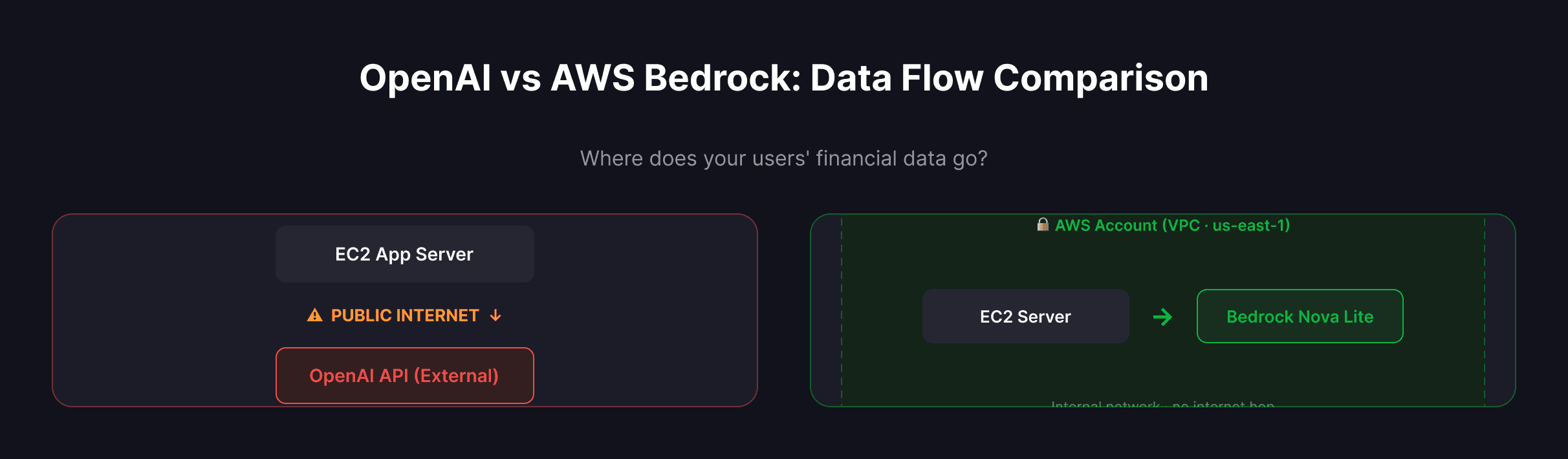
I built a financial advisor AI with AWS Bedrock (Nova Lite) after starting with OpenAI. Here's a real cost and latency comparison from production, not a marketing page.

Jan 28, 2026
How pgvector embeddings improve LLM-to-SQL accuracy by providing schema context instead of dumping entire schemas into prompts.

Jan 20, 2026
Implementing the Model Context Protocol for AI assistant tool integration using Spring Boot and Spring AI.
Jan 15, 2026
Service workers, IndexedDB, and background sync patterns used in MicroItinerary for reliable offline-first travel planning.
backendscale·2026-01-31
Complete redesign from consultancy landing page to engineer-centric project directory with documentation-first aesthetic.
→ Live at rohitraj.tech
src/appsrc/componentssrc/dataMicroItinerary·2026-01-27
AI-powered PWA for planning annual travel itineraries. Features intelligent destination suggestions via OpenAI GPT-4, cost estimation in INR, and Splitwise-style expense splitting for group trips.
→ Full-stack PWA with offline support, Google OAuth, Redis caching
backendwebdocker-compose.ymlspring-ai-mcp-server·2026-01-25
Spring Boot MCP server that converts natural language questions into read-only SQL using LLM. Retrieves schema context via pgvector for RAG-based query generation.
→ Natural language → SQL with safe read-only execution
stellarmind-serverstellarmind-clientsqs·2021-12-27
Reference implementation for AWS SQS integration with Spring Boot including producer/consumer patterns, retry logic, and dead-letter queue handling.
producerconsumerbackendscaleEngineering work visibility — portfolios show results but not thinking
Full implementation: Next.js 16, React 19, documentation-first design system
src/appsrc/componentssrc/dataMicroItineraryTravel apps lack intelligent suggestions and group expense management
Full-stack: Spring Boot 3.2.2 + Java 21 backend, React 18 + Vite PWA, OpenAI integration
backendwebtestspring-ai-mcp-serverNatural language database queries with retrieval-augmented context via pgvector
Full MCP server implementation, pgvector integration, Chain-of-Thought UI
stellarmind-serverstellarmind-clientpostmanmy-expenseSimple expense tracking without bloated features
Full-stack Java application with REST API
apipersistencereportssqsReference implementation for AWS SQS with Spring Boot
Producer/consumer patterns, retry logic, DLQ handling
producerconsumerconfigwealwa-apiPersonal wealth tracking and portfolio management
REST API design, portfolio analytics
apiportfolioanalyticsbackendscale (rohitraj.tech)Engineering work is often invisible. Traditional portfolios show polished results but not the thinking process.
Creating a documentation-first design system that feels like internal engineering docs while remaining visually professional.
MicroItineraryTravel apps lack intelligent suggestions based on season/budget and don't handle group expense splitting well.
Integrating OpenAI GPT-4 for destination suggestions and cost estimation while maintaining offline-first PWA capabilities.
StellarMIND (spring-ai-mcp-server)Business users need to query databases without knowing SQL. Existing tools lack context-aware query generation.
Retrieval-augmented SQL generation using pgvector for schema context, with strict read-only query enforcement for safety.